

Wheelchair Size Chart: Standard Widths and Dimensions (2026)
A wheelchair size chart lists the common wheelchair dimensions. It shows seat widths and total widths. A standard seat is 16 to 20 inches wide. The most common seat is 18 inches. The total width is about 24 to 27 inches.
Have you ever wondered if a wheelchair fits through your door? The total width is the key number. A standard chair clears a 32-inch doorway. It leaves a few inches on each side. Once you see the chart, the choice gets simple.
The chart covers seat width, depth, and height. Seat depth runs 16 to 18 inches. Seat height is about 19 to 21 inches. Bariatric and child sizes fall outside this range. These facts make a wheelchair size chart easy to use.
Wheelchair Size Chart in Different Units
Wheelchairs are sized mainly by seat width. A standard adult seat runs 16 to 20 inches (41 to 51 cm), with 18 inches (46 cm) the most common. The total width, including the wheels, adds about 8 inches to the seat. Here’s the full chart.
| Measurement | Imperial | Metric | Notes |
| Narrow seat | 16 in | 41 cm | Slim adults, teens |
| Standard seat | 18 in | 46 cm | Most common |
| Wide seat | 20 in | 51 cm | Larger adults |
| Total width | 24–27 in | 61–69 cm | Seat plus wheels |
| Seat depth | 16–18 in | 41–46 cm | Front to back |
| Seat height | ~19–21 in | 48–53 cm | Floor to seat |
These are typical values for a standard manual wheelchair. Bariatric and pediatric models fall outside this range. Total width matters most for fitting through doors, so always check both the seat and overall width before buying.
Quick Reference Table
Want the fast version? This chart shows common wheelchair sizes and how to picture each one. All figures are approximate and vary by model.
| Size | Seat Width | Total Width | Best For |
| Narrow | 16 in | ~24 in | Teens, slim adults |
| Standard | 18 in | ~25 in | Most adults |
| Wide | 20 in | ~27 in | Larger adults |
| Extra-wide (bariatric) | 22–30 in | ~29–37 in | Heavier users |
| Pediatric | 10–14 in | ~18–22 in | Children |
| Standard doorway | — | 32 in | Fit reference |
| Kitchen counter width | 25 in deep | — | Size cue |
| Yardstick | 36 in | — | Width cue |
10 Everyday Comparisons for Wheelchair Sizes
Here are 10 ways to picture wheelchair measurements using objects and spaces you already know. Each one is close to a common wheelchair dimension.
The 18-Inch Standard Seat Width

The most common seat width is 18 inches (46 cm), close to the width of a standard dinner tray or a bit less than two dinner plates side by side. Picture a comfortable seat that fits most adults.
The 18-inch seat is the default on most standard wheelchairs. It suits an average-size adult with room to sit comfortably. Narrower 16-inch seats fit teens and slim adults, while 20-inch seats fit larger users. To pick the right seat, a person’s hip width plus about 2 inches gives a good fit. Because 18 inches is close to a serving tray’s width, it’s an easy way to picture the seat. Imagine sitting on a surface a bit under two plates wide.
The Total Width (24–27 Inches)
The total width, including the wheels, runs about 24 to 27 inches (61 to 69 cm), close to the width of a standard kitchen counter’s depth or two skateboards side by side. This is the width that must fit through doorways.
Total width is the seat width plus the wheels and frame, adding about 8 inches to the seat. A standard 18-inch-seat chair is about 25 inches wide overall. This measurement matters most for getting through doors and hallways. A standard interior door is 32 inches wide, so most wheelchairs fit with a few inches to spare. To picture the total width, imagine two skateboards laid side by side, which is close to a standard chair’s width.
Read Also: Florida King Bed vs California King: Full Size Comparison
A Standard Interior Door (Fit Reference)
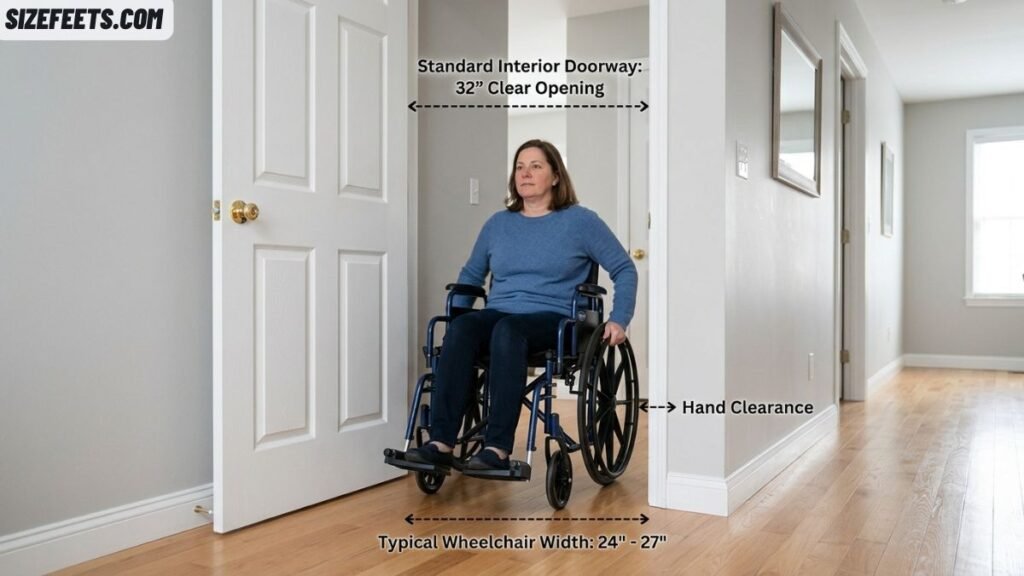
A standard door is the key width to check. An interior door is 32 inches wide, and most wheelchairs are 24 to 27 inches wide, so they fit through with a few inches of clearance. Picture a doorway with the chair passing through.
Doorways are the main obstacle for wheelchair users at home. A 32-inch door leaves about 5 to 7 inches of room on each side of a standard chair. Older homes may have narrower 28- or 30-inch doors, which can be tight. Because a doorway is a familiar width, it’s the easiest way to check if a chair will fit. Measure your doors first, since the total chair width must be smaller than the opening.
A Yardstick (Width Cue)
A yardstick helps you picture the total width. yardstick is 36 inches long, so a standard 25-inch-wide chair reaches about two-thirds of it. Lay a yardstick down and picture the chair covering most of it.
Yardsticks are long rulers marked in inches and feet, equal to exactly 3 feet. Because they’re a clear, familiar length, they make a good measuring guide. A standard wheelchair’s total width covers about two-thirds of a yardstick. If you have one at home, lay it flat to picture the chair’s width. It’s an easy way to measure or compare the overall size against a length you already know.
A Kitchen Chair (Seat Cue)
A kitchen chair helps you picture the seat size. A standard kitchen chair seat is about 16 to 18 inches wide, close to a wheelchair’s seat width. Sit on a dining chair to feel a similar seat size.
Kitchen chairs are built to a comfortable seat size for most adults, which happens to match a standard wheelchair seat. Because everyone knows a dining chair, it’s an easy comparison. A wheelchair’s 18-inch seat feels about the same width as a normal kitchen chair. If you want to picture the seat, just sit on a dining chair and notice the width. It gives you a real, hands-on feel for a standard wheelchair seat.
Two Dinner Plates Side by Side (Seat Cue)
Two dinner plates help you picture the seat width. A standard dinner plate is about 10.5 inches wide, so two side by side reach about 21 inches, a bit more than an 18-inch seat. Picture two plates with a small overlap.
Plates are a familiar round object found in every kitchen. Two of them span a little more than a standard wheelchair seat. Because plates are so common, they make an easy width reference. If you lay two dinner plates side by side and imagine them overlapping slightly, that’s close to an 18-inch seat width. It’s a simple way to picture the seat size using items from your cupboard.
A Carry-On Suitcase (Depth Cue)
carry-on suitcase helps you picture the seat depth. A carry-on is about 14 to 16 inches deep, close to a wheelchair’s 16-to-18-inch seat depth. Set a suitcase down to compare the front-to-back size.
Seat depth is measured from the front edge of the seat to the backrest. A good depth supports the thighs without pressing behind the knees. Because a carry-on is a familiar size, it makes a handy comparison. A wheelchair’s seat depth is close to a carry-on suitcase’s depth. If you have luggage at home, picture the seat as about the depth of a carry-on. It’s an easy way to grasp the front-to-back seat size.
A Standard Bicycle (Wheel Cue)
A bicycle helps you picture the rear wheels. A standard wheelchair rear wheel is about 24 inches across, close to a common bike wheel. Stand a bike next to a wheelchair and the rear wheels look similar.
Wheelchair rear wheels are large so users can push themselves along the hand rims. The 24-inch size is common, close to a 26-inch bike wheel but a bit smaller. Because a bike wheel is familiar, it makes a good comparison. If you picture a bicycle wheel, you can imagine the size of a wheelchair’s large rear wheel. Front casters are much smaller, usually around 8 inches, like a small scooter wheel.
A Kitchen Counter Height (Seat Height Cue)
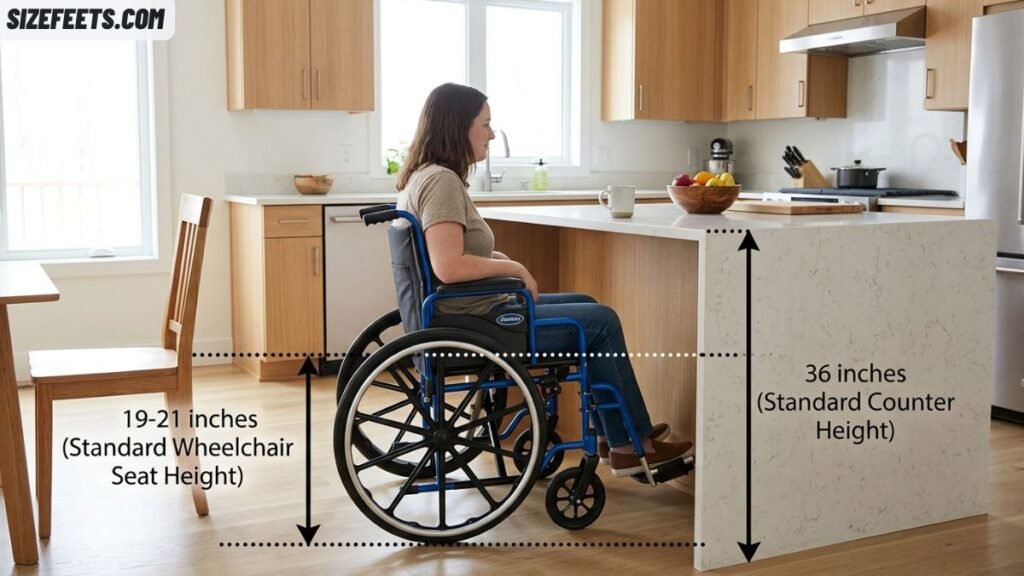
A kitchen counter helps you picture the seat height. A wheelchair seat sits about 19 to 21 inches off the floor, roughly the height of a chair seat or a bit over half a counter. Picture a seat at normal chair height.
Seat height is measured from the floor to the top of the seat. It’s set so users can reach tables and transfer to beds easily. A standard 19-to-21-inch seat height is close to a normal dining chair. Because a chair is a familiar height, it’s an easy reference. If you look at where a kitchen chair’s seat sits, that’s about the height of a wheelchair seat. It helps the chair line up with tables and desks.
A Hallway Width (Space Cue)
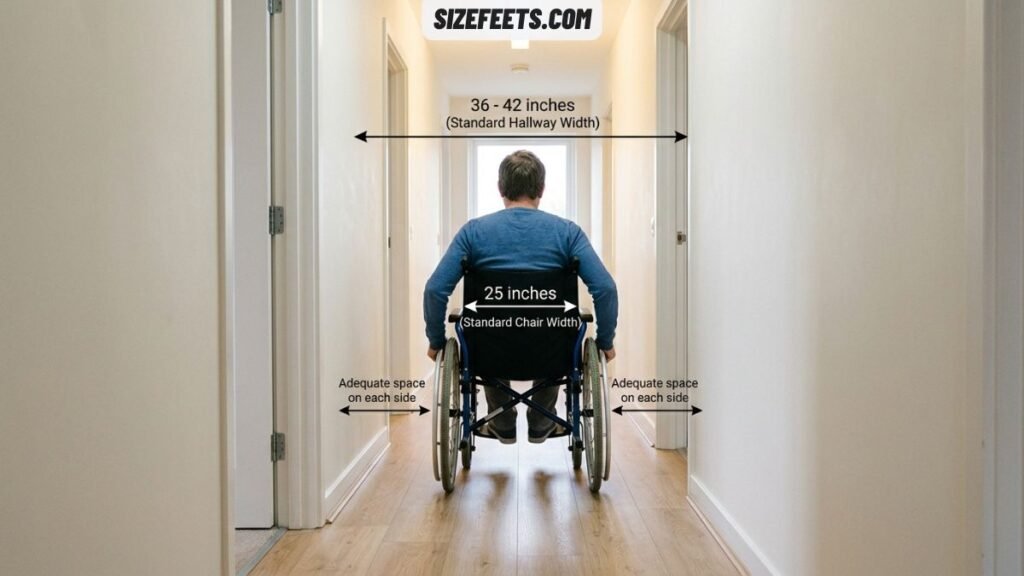
A hallway helps you picture the space a wheelchair needs to move. A standard hallway is about 36 to 42 inches wide, giving a 25-inch chair room to pass and turn. Picture a chair rolling down a hall with space on each side.
Wheelchairs need clear paths to move and turn, so hallway width matters at home. A 36-inch hall lets a standard chair pass, and wider halls allow easier turns. Because a hallway is a familiar space, it’s a good comparison. If you picture your home’s hallway, you can judge whether a wheelchair fits and turns comfortably. Tight halls under 36 inches can make moving harder, so measure before buying.
Read Also: Garage Door Sizes Chart: Every Standard Dimension Explained (2026)
How to Measure for a Wheelchair Without Special Tools
No pro on hand? These simple steps help you find the right wheelchair size with a basic tape measure.
Measure the Hip Width
Start with the person’s hips. Have them sit down, then measure across the widest part of the hips or thighs. Add about 2 inches for comfort and clothing. That total is the seat width to look for. For example, 16-inch hips plus 2 inches means an 18-inch seat. This is the most important measurement, since a seat that’s too tight or too wide is uncomfortable and hard to use.
Measure the Seat Depth
Seat depth supports the legs. Have the person sit, then measure from the back of the hips to the back of the knee. Subtract about 2 inches so the seat doesn’t press behind the knees. That number is the seat depth to look for, usually 16 to 18 inches. A good depth keeps the user comfortable and supported without cutting off circulation in the legs.
Check Your Doorways
Doorways decide if a chair fits your home. Measure the width of your narrowest doorway from frame to frame. The wheelchair’s total width must be smaller than this opening, with a couple of inches to spare for steering. A standard 32-inch door fits most chairs, but older 28-inch doors may not. Checking your doors first makes sure the chair can move through your home easily.
Wheelchair Sizes vs. Other Common Widths
Seeing wheelchair widths next to familiar sizes builds a clear picture. A standard wheelchair is about 25 inches wide overall. A standard doorway is 32 inches, leaving room to pass. A shopping cart is about 22 inches wide, a bit narrower. And a twin bed is 38 inches wide, wider than a chair. So a standard wheelchair fits through most doors and halls, sitting between a shopping cart and a twin bed in width.
| Item | Typical Width | Compared to a Wheelchair |
| Shopping cart | ~22 in | A bit narrower |
| Standard wheelchair | ~25 in | The base width |
| Interior door | 32 in | Wider, fits the chair |
| Twin bed | 38 in | Wider |
| Hallway | 36–42 in | Room to pass |
Frequently Asked Questions
Can a wheelchair fit through a 24 inch door?
No, most wheelchairs cannot fit through a 24-inch door. A standard chair is 24 to 27 inches wide overall and needs a 32-inch doorway.
How to measure for wheelchair size?
Measure across the widest part of the hips while seated, then add about 2 inches. That gives the seat width, usually 16 to 20 inches.
Is a 20 inch wheelchair standard?
Yes, a 20-inch seat is a standard wide size. It suits larger adults, while 18 inches is the most common seat width.
What is a type 4 wheelchair?
Insurance codes group wheelchairs by type. A “Type 4” often refers to a high-strength lightweight manual chair, though exact labels vary by supplier and coding system.
What is a Type 5 wheelchair?
A “Type 5” wheelchair usually refers to an ultra-lightweight manual chair in some coding systems. Labels vary, so check with your supplier or insurance provider.
What size wheelchair for a child?
A child’s wheelchair has a smaller seat, usually 10 to 14 inches wide, with a total width around 18 to 22 inches. Pediatric chairs are sized to the child’s hips plus about 2 inches, and many can adjust as the child grows. Measure the child’s hip width while seated to find the fit.
Conclusion
Now you know how to use a wheelchair size chart with ease. A standard seat is 16 to 20 inches wide. The most common seat is 18 inches. The total width runs about 24 to 27 inches. That fits through a standard 32-inch door. These few numbers cover almost everything you need to know.
You can also picture the sizes with simple objects. A wheelchair seat matches a normal kitchen chair. The total width is close to two skateboards side by side. A yardstick helps you compare the overall width. Always measure the person’s hips and your doorways first. With this wheelchair size chart in mind, you can pick the right chair anytime.
1: Staircase Dimensions in Feet: Standard Sizes Explained
2: Average Living Room Size: Typical Dimensions Explained
3: How Many Square Feet Is a Basketball Court? Full Breakdown
4: Softball Field vs Baseball Field Size: Full Comparison







One Comment