
Grams Visualized: What Common Weights Really Look Like
Grams visualized means picturing gram weights with everyday objects. One gram is about a paperclip. Five grams is a US nickel. One hundred grams is a stick of butter. This makes small weights easy to see.
Have you ever needed to picture grams with no scale? Simple items can help. A paperclip shows one gram. A nickel shows five grams exactly. Once you learn a few of these, you can guess weights anytime.
Grams are a small metric unit. One gram equals about 0.035 ounces. A dollar bill weighs close to one gram. A liter of water weighs 1,000 grams. These facts make grams visualized easy to understand.
Grams Visualized in Different Units
A gram is the base metric unit for small weights. One gram equals about 0.035 ounces, or 0.001 kilograms. It’s a tiny amount, best pictured with small objects like a paperclip or a dollar bill. Here’s how grams line up across the units people use most.
| Unit | Equivalent | Notes |
| Gram | 1 g | The base figure |
| Ounces | ~0.035 oz | Just a small fraction |
| Kilograms | 0.001 kg | One-thousandth |
| Milligrams | 1,000 mg | For tiny amounts |
| Pounds | ~0.0022 lb | A very small part |
| Carats | 5 carats | Used for gems |
Because one ounce is about 28.35 grams, a single gram is just a small slice of an ounce. Grams are used worldwide for food, medicine, and mail. Small everyday objects make the best way to picture different gram weights.
Quick Reference Table
Want the fast version? This chart matches common gram weights to everyday objects. All figures are approximate unless marked exact.
| Weight | Everyday Object | Visual / Notes | Best For |
| 1 g | A paperclip | Small and light | Tiny weights |
| 1 g | A dollar bill | One banknote | Paper cue |
| 5 g | A US nickel | Exact coin weight | Coin cue |
| 10 g | Two sheets of paper | Light stack | Paper cue |
| 28 g | A slice of bread | About 1 ounce | Food cue |
| 50 g | A large egg | Common food | Kitchen cue |
| 100 g | A stick of butter | Quarter pound-ish | Food cue |
| 200 g | A cup of dry rice | Kitchen amount | Food cue |
| 500 g | A loaf of bread | Half a kilo | Food cue |
| 1,000 g (1 kg) | A liter of water | Full kilo | Liquid cue |
12 Everyday Objects for Grams Visualized
Here are 12 objects that help you picture common gram weights without a scale. Each one is close to a well-known metric weight.
A Paperclip (1 Gram)
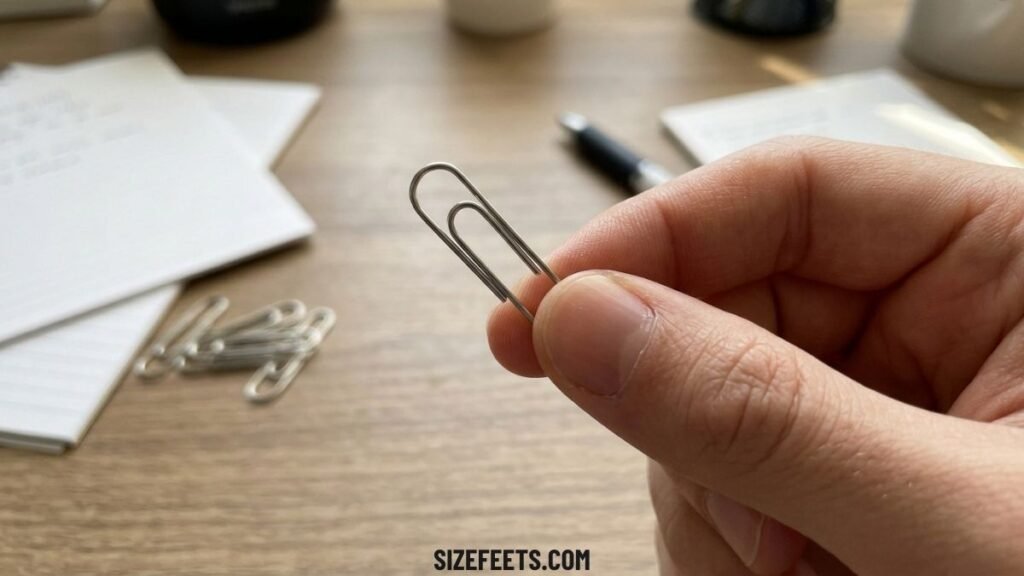
The classic 1-gram object is a paperclip. A standard paperclip weighs about 1 gram. Hold one in your hand and you’re feeling close to a single gram.
Paperclips are made of bent steel wire and come in a standard size. Each weighs almost exactly 1 gram, which makes it the go-to reference for the smallest common metric weight. Because paperclips are in most offices and desks, they’re an easy, always-handy guide. If you want to picture 1 gram, just pick up a paperclip. It’s the simplest way to feel this tiny weight using a common item you can find almost anywhere.
Read Also: How Many Ounces Is 30g? Exact Conversion and Examples
A US Nickel (5 Grams)
A US nickel is an exact match for 5 grams. Each nickel weighs precisely 5 grams. Hold one and you’re feeling exactly 5 grams.
Nickels are made of a copper-and-nickel blend and struck to a precise 5-gram weight by the US Mint. Because coins are so exact, they make reliable little weights. A single nickel is the perfect 5-gram reference, and stacking them lets you count up by fives. Two nickels make 10 grams, and ten make 50. If you have spare change, a nickel gives you an exact 5-gram weight. It’s one of the most accurate references you can find for small metric weights.
A Dollar Bill (1 Gram)
A dollar bill is close to 1 gram. A single US banknote weighs about 1 gram. Hold a bill and you’re feeling close to a single gram.
US bills are printed on a tough cotton-and-linen blend, which keeps them light but strong. Each note weighs almost exactly 1 gram, no matter the value, so a $1 and a $100 weigh the same. Because you likely carry cash, a bill is a handy 1-gram reference. If you want to picture a gram, hold a single banknote. It’s an easy, everyday way to feel this tiny weight using money from your wallet or pocket.
A Large Egg (50 Grams)
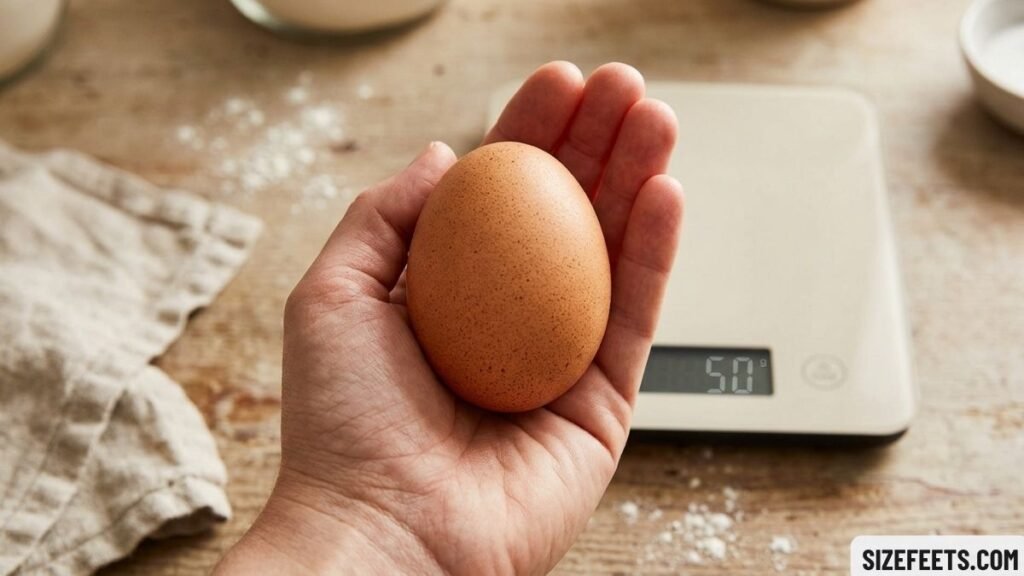
A large egg is close to 50 grams. A standard large egg weighs about 50 grams without the shell, or a bit more with it. Hold an egg to feel about 50 grams.
Eggs are graded by size, with “large” being the most common in US stores. One out of its shell is close to 50 grams, a handy kitchen amount. Because eggs are in most fridges, they make a good food-based reference. If you want to picture 50 grams, hold a large egg. It’s an everyday item that lands right around this weight, making it easy to gauge half of 100 grams using something from your kitchen.
A Slice of Bread (28 Grams)
A slice of bread is close to 28 grams, about 1 ounce. A standard slice of sandwich bread weighs about 28 to 30 grams. Hold a slice to feel around an ounce.
Bread weight varies by type, with thick or whole-grain slices weighing more. A regular white or wheat slice lands close to 28 grams, which is about one ounce. Because bread is in almost every kitchen, a slice is a handy reference. If you want to picture 28 grams, or roughly an ounce, pick up one slice of sandwich bread. It’s a light, everyday food that helps you feel this small weight, close to the 1-ounce mark.
A Stick of Butter (113 Grams)
A stick of butter is close to 100 grams. A standard US stick of butter weighs 113 grams, a quarter pound, just over 100 grams. Hold a stick to feel about 100 grams.
Butter is sold in sticks wrapped in paper, with four sticks to a pound. Each stick is 4 ounces, or 113 grams, a bit above the round 100-gram mark. Because butter is in most fridges, it makes a handy kitchen reference. If you want to picture 100 grams, a stick of butter is close, just a little heavier. It’s an everyday food that helps you feel this common weight, useful for cooking and baking.
Two Sheets of Paper (10 Grams)
Two sheets of paper are close to 10 grams. A single sheet of printer paper weighs about 4.5 to 5 grams, so two reach about 10 grams. Hold two sheets to feel the weight.
Printer paper comes in standard sizes and weights, with a common sheet close to 5 grams. Because paper is in most homes and offices, it makes a handy reference. Two sheets stacked come to about 10 grams. If you want to picture 10 grams, hold a couple of sheets of paper. It’s a light, everyday item that adds up to this small weight, and you can add more sheets to estimate heavier amounts in small steps.
A Cup of Dry Rice (200 Grams)
A cup of dry rice is close to 200 grams. One cup of uncooked white rice weighs about 200 grams. Hold a full cup to feel the weight.
Rice is a kitchen staple, and a standard measuring cup of the dry grain comes to about 200 grams. Because rice is in most pantries, it makes a handy food reference. If you want to picture 200 grams, fill a measuring cup with dry rice. It’s an everyday ingredient that lands right around this weight. The exact amount varies slightly by rice type, but a level cup is a solid way to gauge 200 grams.
A Loaf of Bread (500 Grams)
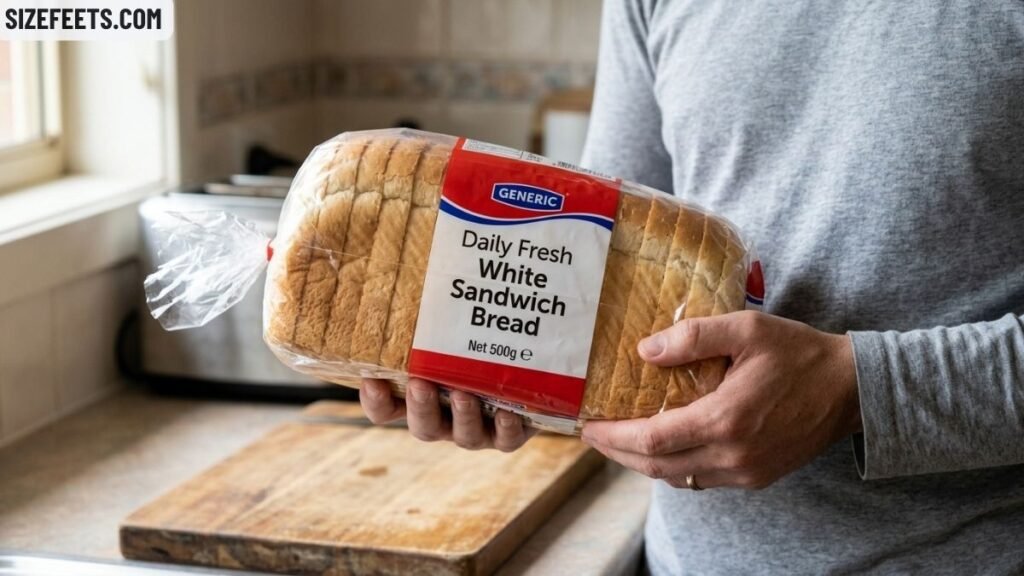
A loaf of bread is close to 500 grams. A standard loaf of sandwich bread weighs about 500 grams, or half a kilogram. Hold a full loaf to feel the weight.
Bread loaves vary by brand and type, but a common sandwich loaf is close to 500 grams. Because bread is in most kitchens, it makes a handy reference. If you want to picture 500 grams, or half a kilo, hold a full loaf of bread. It’s an everyday food that lands right around this weight. This is a useful mid-range reference, sitting halfway between 100 grams and a full kilogram.
Read Also: How Much Is 500 Grams? Everyday Objects That Weigh It
A Liter of Water (1,000 Grams)
A liter of water is exactly 1,000 grams, or 1 kilogram. Since water weighs about 1 gram per milliliter, a full 1-liter bottle weighs about 1,000 grams. Hold a liter bottle to feel a full kilo.
Water has a handy property: 1 milliliter weighs almost exactly 1 gram. So a liter, which is 1,000 milliliters, weighs about 1,000 grams. Because water bottles are everywhere, this is an easy reference. If you want to picture 1,000 grams, or 1 kilogram, hold a full 1-liter bottle. It’s one of the most reliable ways to feel a kilo, using something found in nearly every home and store.
A Tablespoon of Sugar (12 Grams)
A tablespoon of sugar is close to 12 grams. One level tablespoon of granulated sugar weighs about 12 grams. Fill a tablespoon to picture the weight.
Sugar is a common baking ingredient, and a level tablespoon comes to about 12 grams. Because measuring spoons are in every kitchen, this is a handy reference for small food weights. If you want to picture around 12 grams, fill a tablespoon with sugar. It’s an everyday amount that helps you gauge small weights when cooking. Keep in mind other ingredients weigh differently per spoon, so this works best for sugar and similar granulated foods.
A AAA Battery (11 Grams)
A AAA battery is close to 11 grams. A standard AAA battery weighs about 11 grams. Hold one to feel around 11 grams.
AAA batteries power small remotes, clocks, and toys, so most homes have some. The metal casing holds the chemicals that store the charge, giving a weight around 11 grams. Because a AAA battery is a familiar object, it makes a handy reference. If you want to picture about 11 grams, hold a single AAA battery. It’s a common household item that lands close to this small weight, useful for gauging light amounts near 10 grams.
How to Measure Grams Without a Scale
No scale handy? These simple tricks help you estimate grams using things you already have.
Count Coins or Paperclips
Coins and paperclips make handy little weights. A paperclip is about 1 gram, and a US nickel is exactly 5 grams. Count out paperclips for small weights, or nickels for larger ones, to reach the grams you need. For example, six nickels make 30 grams. Because these items have known, exact weights, they let you measure grams with no scale, using spare change or office supplies as reliable references.
Use Water and Volume
Water gives an easy gram estimate. Since 1 milliliter of water weighs about 1 gram, you can use measuring cups or spoons to gauge weight. One cup of water is about 240 grams, and one tablespoon is about 15 grams. Fill a measuring tool with water to picture the matching gram weight. This works well for liquids and gives a close estimate for any water-based amount, using tools already in your kitchen.
Build a Simple Balance
A balance lets you compare weights. Rest a ruler on a round pencil to make a seesaw. Put a known weight, like nickels, on one side, then add your item to the other until it levels out. When both sides balance, your item weighs about the same as the coins. This DIY method helps you measure grams without a scale, using coins or paperclips as reliable reference weights you can count.
Grams Compared to Other Common Weights
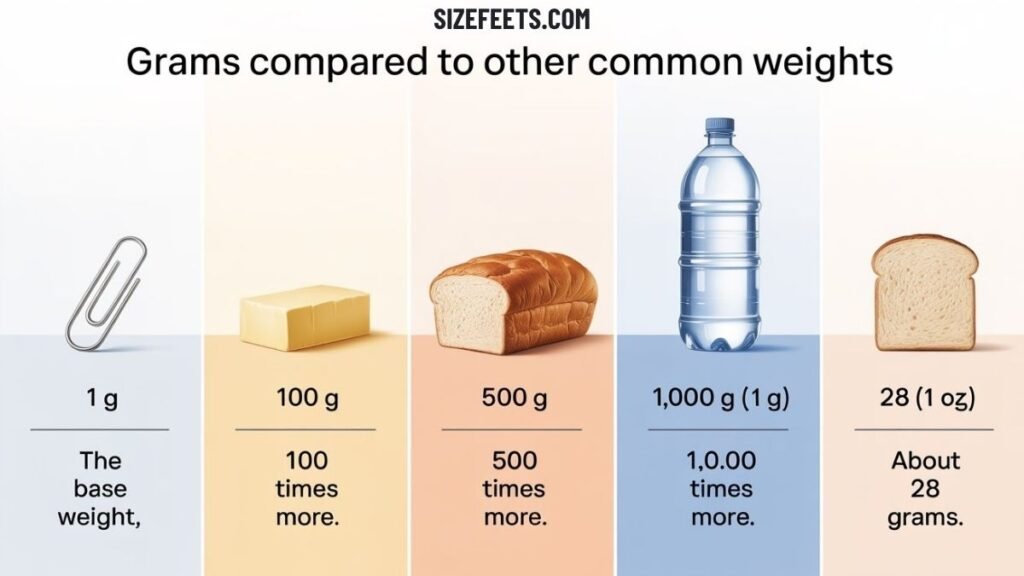
Seeing grams next to other weights helps them click. 1 gram is tiny, about a paperclip. 100 grams is light, close to a stick of butter. 500 grams is half a kilo, about a loaf of bread. And 1,000 grams is a full kilogram, like a liter of water. So grams cover a wide range, from a single paperclip up to a heavy bottle, all in the same metric family.
| Weight | Everyday Example | Compared to 1 Gram |
| 1 g | A paperclip | The base weight |
| 100 g | A stick of butter | 100 times more |
| 500 g | A loaf of bread | 500 times more |
| 1,000 g (1 kg) | A liter of water | 1,000 times more |
| 28 g (1 oz) | A slice of bread | About 28 grams |
Frequently Asked Questions
How big does 1 gram look like?
1 gram looks like a single paperclip or a dollar bill. It is a tiny, light weight, about 0.035 ounces.
What is a gram visually?
A gram is best pictured as a paperclip. A dollar bill weighs about one gram too. It is a small metric unit.
How to visualize 20 grams?
20 grams is about four US nickels stacked, since each weighs 5 grams. A bit less than a slice of bread works too.
How much is 100 grams visualized?
100 grams looks like a stick of butter, a small apple, or about 20 nickels stacked. It is a bit under a quarter pound.
How do 100 grams look like?
100 grams looks like a stick of butter or a small apple. About 20 US nickels stacked reach the same weight.
Is a gram heavy?
No, a gram is very light. It’s about the weight of a single paperclip or a dollar bill. In everyday terms, a gram is a tiny amount, best used for small things like spices, medicine, or mail. It takes 1,000 grams to make one kilogram.
Conclusion
Now you know grams visualized and how to picture weights with ease. One gram equals about a paperclip or a dollar bill. Five grams matches a US nickel exactly. One hundred grams is close to a stick of butter. A liter of water weighs 1,000 grams. These few facts cover almost everything you need to know.
You can also measure grams with simple tricks. A paperclip gives you a one-gram guide. Nickels let you count up by fives. A liter bottle of water shows a full kilogram. Keep these everyday objects in mind whenever you need a quick check. With this knowledge, you can use grams visualized to picture any weight anytime, even without a scale.
Related Guides:
1: How Much Is 20 Grams? 10 Everyday Objects That Weigh It
2: How Much Is 300 g? Everyday Objects That Weigh It
3: How Much Is 10 Grams? 10 Everyday Objects That Weigh It
4: What Weighs 100 Grams? 10 Everyday Objects You Already Own




One Comment