
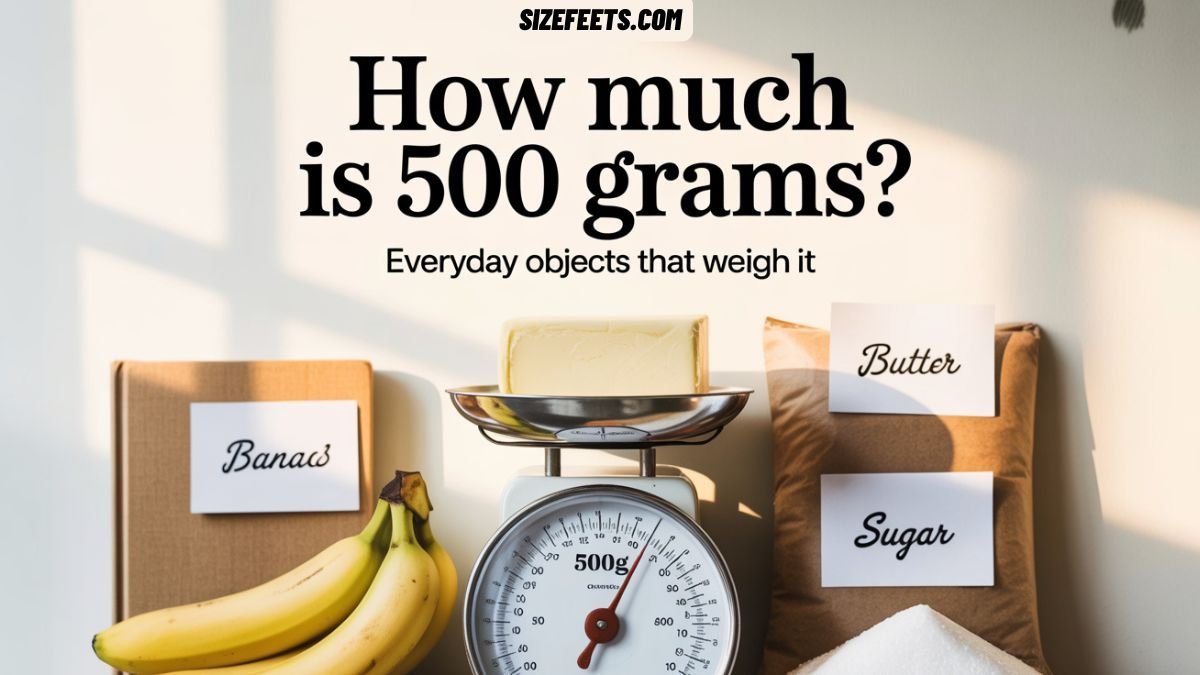
How Much Is 500 Grams? Everyday Objects That Weigh It
How much is 500 grams is a common way to picture a medium weight. 500 grams equals about 1.1 pounds. That is exactly half a kilogram. Many everyday objects hit this weight. 500 mL of water weighs exactly 500 grams, and so do 100 US nickels.
Have you ever needed to weigh something with no scale nearby? You can still get very close. A loaf of bread weighs about 500 grams. A full water bottle does too. Once you learn a few of these, you can guess the weight anytime.
Lots of common items land near 500 grams. A block of butter comes close at 454 grams. A large hardcover book works as well. A small pineapple does too. These simple objects make 500 grams easy to picture without any tools.
How Much Is 500 Grams in Different Units
Let’s start with the conversions. 500 grams equals about 1.1 pounds, or roughly 17.6 ounces. In metric terms, that’s 0.5 kilograms, exactly half a kilo. Here’s how 500 grams breaks down across the units people search for most.
| Unit | Equivalent | Notes |
| Grams | 500 g | The base figure |
| Kilograms | 0.5 kg | Exactly half a kilo |
| Pounds | ~1.1 lb | Just over one pound |
| Ounces | ~17.6 oz | A little over a pound |
| Milligrams | 500,000 mg | For very small scales |
| Water volume | 500 mL | Water weighs 1 g per mL |
| US cups (water) | ~2.1 cups | Volume of water at this weight |
Because water weighs one gram per milliliter, 500 grams of water is the same as 500 mL. That trick makes 500 grams easy to picture in the kitchen.
Quick Reference Table
Want the fast version? These common items weigh close to 500 grams. The table is honest about which ones are exact and which are just close.
| Item | Exact or Approx. | Visual / Notes | Best For |
| 500 mL of water | Exact | 1 g per mL | Kitchen math |
| A standard loaf of bread | Approx. | ~450–500 g | Food weight |
| 100 US nickels | Exact | 5 g each × 100 = 500 g | A perfect DIY weight |
| A block of butter (1 lb) | Approx. | 454 g, just under | Baking reference |
| A full water bottle (500 mL) | Approx. | ~520 g with bottle | Grab-and-go cue |
| A basketball | Approx. | ~567–624 g, heavier | Sports reference |
| Two cups of flour | Approx. | ~480 g | Kitchen scoop |
| A pineapple (small) | Approx. | ~500–900 g | Produce weight |
| A soccer ball | Approx. | ~410–450 g, lighter | Sports reference |
| A large book | Approx. | ~500–700 g | Shelf reference |
10 Everyday Things That Weigh 500 Grams
Here are 10 objects that weigh about 500 grams. A couple land on the number exactly, and the rest sit close enough to picture without a scale.
500 mL of Water
Read Also : iPhone Wallpaper Size (2026): Exact Pixel Dimensions for Every Model
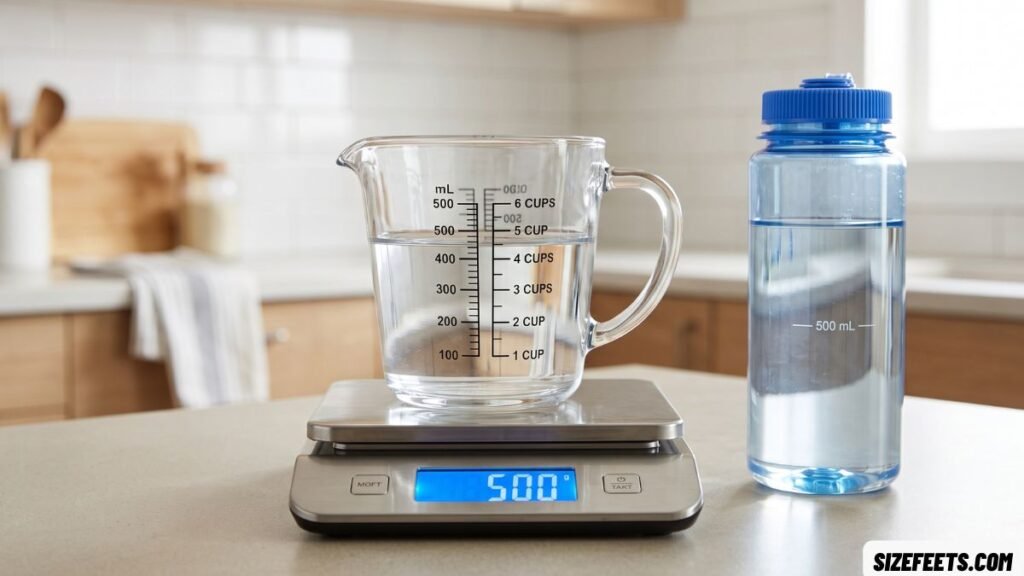
Water gives you an exact match every time. Because water weighs 1 gram per milliliter, pouring out 500 mL of water gives you 500 grams of weight. Fill a measuring cup or a half-liter bottle to the line to see it for yourself.
This works thanks to water’s density, which stays close to 1 g/mL at normal room temperature. The rule is handy in the kitchen when a recipe lists grams but you only have a measuring cup. It also explains why 1 liter of water weighs 1 kilogram, so half a liter weighs half a kilo. Just remember that other liquids, like oil or milk, weigh slightly more or less than plain water.
A Loaf of Bread
A standard loaf of bread weighs close to 500 grams. Most store-bought loaves weigh about 450 to 500 grams, so a full loaf sits right around the mark. Pick up a fresh loaf and feel a weight near half a kilo.
Bread is mostly flour, water, and yeast, which bakes into a light, airy shape. The weight is printed on the label as the net weight, meaning the food only, not the bag. Some artisan loaves weigh more because they’re denser and hold less air. Since almost every kitchen has bread on hand, a loaf makes an easy and familiar reference for 500 grams.
100 US Nickels
Read Also : What Weighs 1 Gram? 10 Tiny Everyday Objects
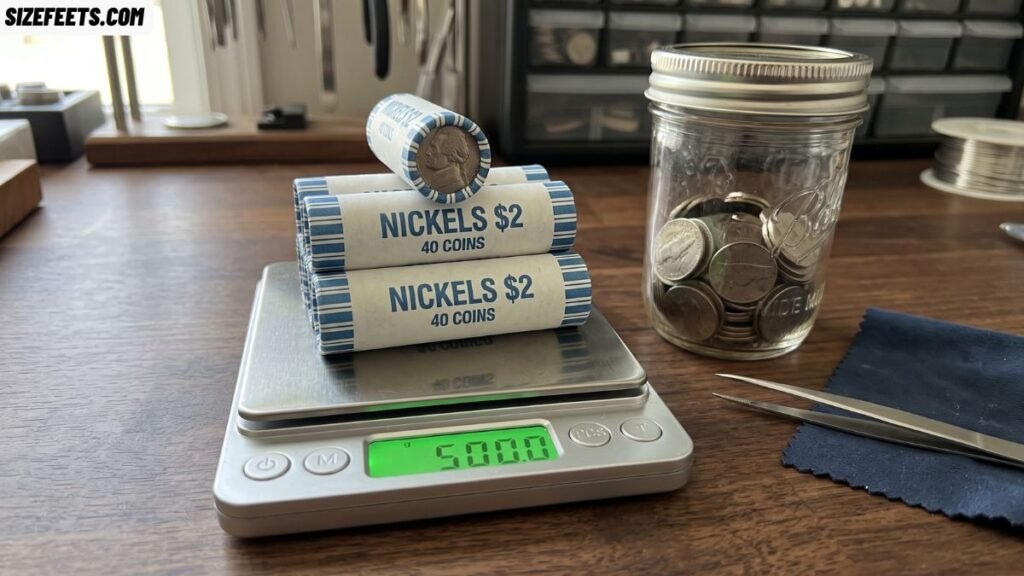
If you want to know what weighs exactly 500 grams, count out 100 US nickels. The US Mint makes each nickel weigh 5.000 grams, so 100 of them add up to 500 grams on the dot. This is one of the most reliable homemade weights you can build.
Nickels are made of a blend of copper and nickel metal, which keeps their weight steady and consistent. People often use coin stacks to test or calibrate a scale. A full roll holds 40 nickels and weighs 200 grams, so two and a half rolls give you a clean 500g. Keep a stack in a jar and you’ll always have a trusted reference weight for half a kilo.
A Block of Butter
A one-pound block of butter is close to 500 grams. In the US, a standard box holds four sticks and weighs 454 grams, just under half a kilo. Hold a full box and you’re holding a bit less than 500g.
Butter is sold in set sizes, which makes it a handy kitchen reference. The four-stick box is the most common size in American stores. Each stick weighs about 113 grams, so the whole box comes to 454 grams. Bakers weigh butter for accuracy, since the fat content shapes how a recipe turns out. For a quick picture of 500 grams, a full box of butter lands very close.
A Full 500 mL Water Bottle
A full half-liter water bottle weighs a touch over 500 grams. The water inside weighs 500 grams, and the plastic bottle adds about 15 to 20 grams, so the total lands near 520 grams. Grab a sealed bottle and feel a weight close to half a kilo.
The 500 mL bottle is one of the most common single-serve sizes sold worldwide. The empty plastic is very light, which is why the water makes up almost all the weight. This makes a full bottle a quick, grab-and-go reference you can find in any store or fridge. Just remember the bottle itself adds a small amount on top of the 500 grams of water.
Two Cups of Flour
Two cups of all-purpose flour weigh close to 500 grams. One cup of flour weighs about 120 to 125 grams, so two cups come to around 240 to 250 grams, and four cups reach 500g. For a closer match to 500 grams, measure out about four cups.
Flour weight changes with how tightly it’s packed, which is why bakers weigh it instead of scooping. Sifted flour weighs less per cup because it holds more air. Whole wheat flour packs a bit heavier than white flour. For the best result, spoon the flour into the cup and level it off. When you need 500 grams in the kitchen, roughly four level cups of flour will do the job
A Small Pineapple
A small pineapple weighs about 500 grams. Pineapples range widely, from small ones near 500 grams to large ones over 2,000 grams. Pick a small, firm fruit for the closest match to half a kilo.
Pineapples have a tough, spiky skin that holds a lot of the fruit’s weight. They’re packed with vitamin C and natural sugar, which gives them their sweet, tangy taste. Because their size varies so much, a pineapple works as an approximate cue, not an exact one. Still, a small pineapple from the produce aisle gives you a fun and easy way to picture 500 grams of food.
A Soccer Ball
A regulation soccer ball weighs a little under 500 grams. Under the sport’s official rules, a size 5 ball weighs about 410 to 450 grams when inflated. Hold one and you’ll feel a weight just below half a kilo.
The ball is made of stitched or bonded panels over an inner rubber bladder that holds the air. The weight is set by the rules so play stays fair across every match. A slightly heavier or older ball can creep closer to 500 grams. Since soccer balls are common in homes, garages, and parks, one makes a familiar sports reference for a weight near 500 grams.
A Large Hardcover Book
A large hardcover book weighs close to 500 grams. A typical mid-size hardcover weighs about 500 to 700 grams, so a slimmer one lands right near half a kilo. Lift a hardcover off the shelf to feel the weight.
Book weight depends on the page count, paper thickness, and cover material. Hardcovers weigh more than paperbacks because of their stiff board covers. A thick textbook can weigh well over a kilogram, so pick a normal novel-size hardcover for the best match. Since most homes have a shelf of books, a medium hardcover is an easy indoor reference for 500 grams.
A Box of Pasta and a Half
About one and a half boxes of dry pasta weigh 500 grams. A standard box of pasta holds 340 grams (12 oz) in the US, so one box plus about half of another reaches 500g. In many other countries, a single box holds exactly 500 grams.
Pasta is made from wheat flour and water, dried into a hard, shelf-stable shape. The net weight is printed right on the box, which makes it a handy pantry reference. European brands often sell pasta in clean 500-gram packs, so one full box hits the mark exactly. If you have pasta at home, check the label and you’ll have a quick guide to half a kilo.
How to Measure 500 Grams Without a Scale
No scale in the house? These simple methods let you get close to 500 grams using things you already own.
Use a Stack of Coins
US nickels are the best coin for this trick. Each one weighs exactly 5 grams, so 100 nickels reach 500 grams. Count them into a cup or bag to keep track. This method is so reliable that people use coin stacks to test kitchen scales. A full roll of nickels holds 40 coins and weighs 200 grams, so two and a half rolls give you a clean 500 grams with no counting.
Pour Out 500 mL of Water
A measuring cup turns water into a weight. Since water weighs 1 gram per milliliter, fill a cup to the 500 mL line and you have 500 grams. This works because of water’s density at room temperature. A standard 500 mL water bottle also holds this amount, so you can pour from one to check. It’s the fastest kitchen method when a recipe gives grams but you don’t own a scale.
Grab a Labeled Package
Many foods print their net weight on the package. Look for a bag of rice, sugar, or pasta marked 500g. The number on the label tells you the food weighs 500 grams, not counting the wrapper. This gives you a ready-made reference with no counting or pouring. Keep one labeled item in the pantry and you’ll always have a quick way to picture half a kilo.
How Much Is 500 Grams vs. Other Common Weights
Read Also : What Weighs 100 Grams? 10 Everyday Objects You Already Own
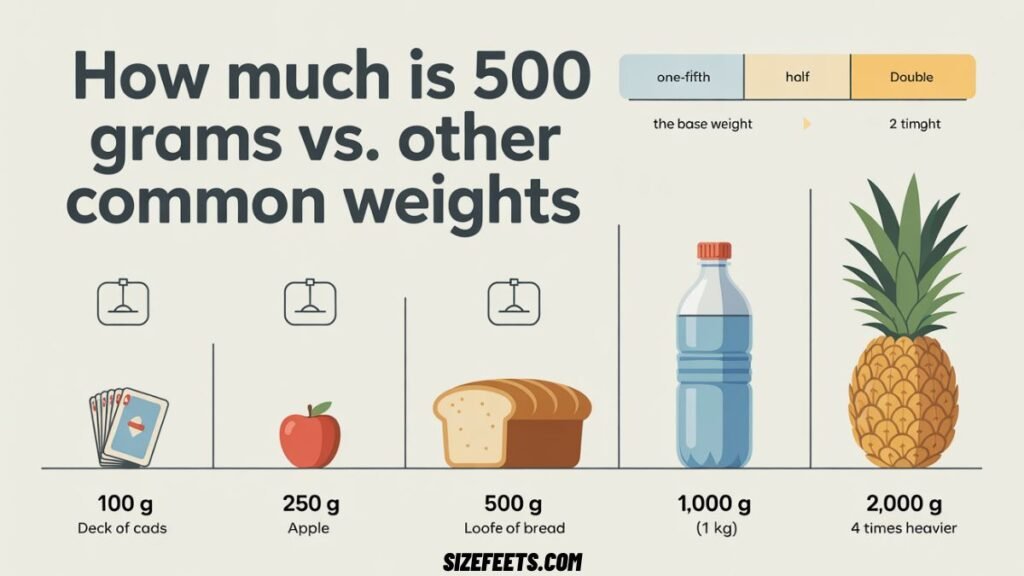
Seeing 500 grams next to nearby weights helps it click. 250 grams is half of this, about the weight of a stick and a half of butter or a small apple. 500 grams is half a kilo, roughly a loaf of bread. 1,000 grams makes 1 kilogram, double this amount, about a full 1-liter water bottle. And 100 grams is one-fifth of 500, close to a deck of cards or a medium banana. So 500 grams is a moderate weight, heavier than a banana but lighter than a full liter of water.
| Weight | Compared to 500 g | Everyday Example |
| 100 g | One-fifth | A deck of cards or a medium banana |
| 250 g | Half | A small apple or 1.5 sticks of butter |
| 500 g | The base weight | A loaf of bread or 500 mL of water |
| 1,000 g (1 kg) | Double | A full 1-liter water bottle |
| 2,000 g (2 kg) | 4 times heavier | A large pineapple or a small watermelon |
Frequently Asked Questions
Is 500g equal to 1 kg?
No, 500 grams is not equal to 1 kg. It is exactly half a kilogram, since one kilogram holds 1,000 grams.
Is 500g the same as 1 lb?
No, 500 grams is a bit more than 1 pound. One pound equals about 454 grams, so 500 grams is roughly 1.1 pounds.
How much is 500 grams equal to?
500 grams equals about 1.1 pounds, 17.6 ounces, or half a kilogram. It is also the same as 500 mL of water.
How much is 500g visually?
Visually, 500 grams looks like a loaf of bread, a full 500 mL water bottle, or a block of butter. All sit near half a kilo.
Is 500g half of 1 kg?
Yes, 500 grams is exactly half of 1 kg. One kilogram equals 1,000 grams, so 500 grams is precisely 0.5 kg.
How many nickels make 500 grams?
100 nickels make 500 grams. Each US nickel weighs exactly 5 grams, so 100 × 5 equals 500. That’s two and a half rolls of nickels, since a full roll holds 40 coins and weighs 200 grams. This makes nickels a simple, exact tool for checking a scale.
Conclusion
Now you know how much is 500 grams and how to picture it with ease. 500 grams equals about 1.1 pounds, or exactly half a kilogram. 500 mL of water weighs exactly 500 grams. 100 US nickels hit the same mark too. These make perfect homemade weights that you can trust without any tool. You can even use them to check a kitchen scale at home.
Many everyday objects also help you feel 500 grams. A loaf of bread weighs close to this amount. A full water bottle and a block of butter come near it as well. Keep these simple items in mind whenever you need a quick guide. With this knowledge, you can estimate how much is 500 grams anytime, even without a scale nearby.





2 Comments