

26 Inch in Feet: Exact Conversion and Real Comparisons (2026)
26 inch in feet is a simple length conversion. It equals 2 feet 2 inches. In decimal, that is about 2.17 feet. In metric, it is 66 centimeters. This gives you a quick idea of the size.
Have you ever needed to picture 26 inches with no ruler? You can still get very close. A 26-inch bike wheel matches it exactly. A small TV shows it on the diagonal. Once you learn a few of these, you can guess the length anytime.
The math is easy to remember. You divide 26 by 12 to get feet. That leaves 2 feet with 2 inches over. Two rulers plus two inches reach it too. These simple facts make 26 inch in feet easy to picture.
26 Inch in Feet in Different Units
Let’s start with the conversion. 26 inches equals 2 feet 2 inches, since 12 inches make one foot and 26 leaves 2 inches over. In decimal, that’s about 2.17 feet. In metric, 26 inches is 66.04 centimeters, or 0.66 meters. Here’s the full breakdown.
| Unit | Equivalent | Notes |
| Inches | 26 in | The base figure |
| Feet and inches | 2 ft 2 in | 26 ÷ 12 = 2 r 2 |
| Feet (decimal) | ~2.17 ft | Just over 2 feet |
| Centimeters | ~66 cm | Exact metric match |
| Millimeters | ~660 mm | For fine measuring |
| Meters | ~0.66 m | About two-thirds of a meter |
| Yards | ~0.72 yd | Under three-quarters of a yard |
Because 12 inches make one foot, 26 inches splits into 2 feet plus 2 inches. The decimal 2.17 feet comes from dividing 26 by 12. Both forms are handy depending on the job.
Quick Reference Table
Want the fast version? These common objects measure close to 26 inches in length, width, or height. The table is honest about which ones are exact and which are just close.
| Item | Exact or Approx. | Visual / Notes | Best For |
| A 26-inch bike wheel | Exact | 26 in across | The named match |
| A standard baseball bat | Approx. | ~32 in, a bit longer | Length cue |
| A yardstick minus 10 in | Exact | 36 in − 10 in | Length cue |
| Two rulers end to end | Approx. | 12 in each = 24 in | A bit short |
| A carry-on suitcase (height) | Approx. | ~22–24 in | Travel cue |
| An acoustic guitar | Approx. | ~40 in, longer | Music cue |
| A large TV (26-inch, diagonal) | Exact | 26 in corner to corner | Tech reference |
| A golf putter | Approx. | ~34 in, longer | Sports cue |
| Two dollar bills stacked long | Approx. | 6.14 in each × 4 | Pocket cue |
| A toddler’s height (2-year-old) | Approx. | ~33–35 in, taller | Human cue |
Everyday Things That Are About 26 Inches
A 26-Inch Bike Wheel
Read Also : How Tall Is 57 Inches? Height Guide With Real Comparisons
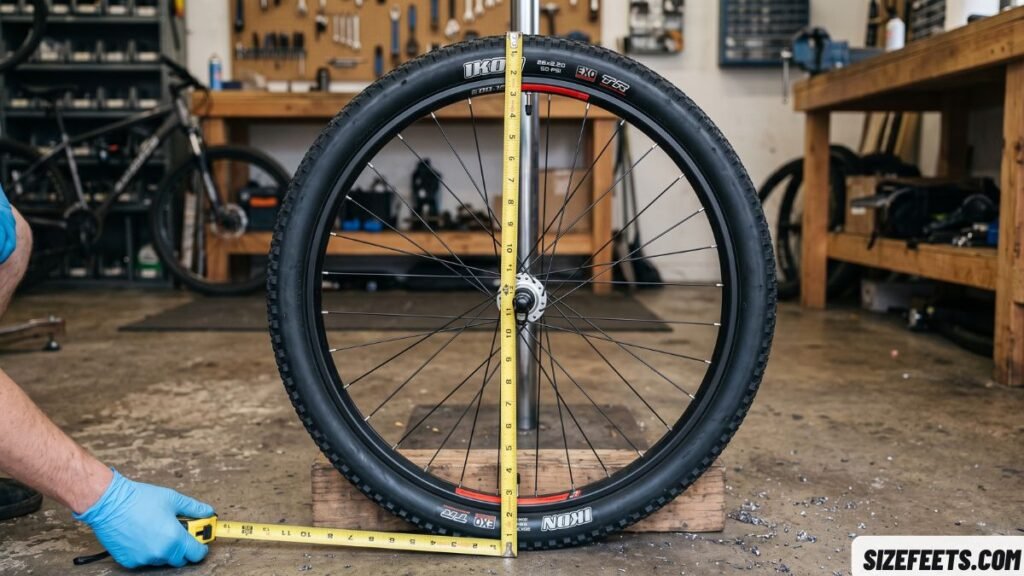
The exact match is a 26-inch bike wheel. This common wheel size measures 26 inches across the outer tire, which is why it’s named that way. Stand a bike up and look at the wheel to picture 26 inches easily.
The 26-inch wheel was the standard for mountain bikes and many adult bikes for decades. Wheel size is measured by the outer diameter of the tire. Newer bikes also use 27.5 and 29-inch wheels, but 26 inches is still very common. Because the size is right in the name, a bike wheel is one of the clearest ways to picture 26 inches. If you have a bike, its wheel shows you the measurement at a glance.
A 26-Inch TV (Diagonal)
A small TV named 26 inches gives you the number directly. TVs are measured by their screen size on the diagonal, so a “26-inch TV” has a display that runs about 26 inches corner to corner. Look at the screen from one corner to the opposite one to picture 26 inches.
Keep in mind the screen is measured across the diagonal, not the width. So the TV’s width is a bit less than 26 inches, usually around 23 inches. Screen makers use this diagonal system for all TVs and monitors. If you have a small TV or monitor around this size, its diagonal gives you a good picture of 26 inches. It’s an easy tech-based reference.
A Yardstick Minus 10 Inches
yardstick helps you picture 26 inches by subtraction. A yardstick is 36 inches long, so 26 inches is 10 inches short of the end. Lay a yardstick down and stop at the 26-inch mark to see the length.
Yardsticks are long rulers used for measuring and drawing straight lines, marked in inches and feet. Because a yardstick equals exactly 3 feet, it’s a clear building block. The 26-inch point sits 10 inches before the end, or about two-thirds of the way along. If you have a yardstick, just find the 26 mark. It’s an easy, exact way to picture or measure this length at home.
A Baseball Bat
A baseball bat is a bit longer than 26 inches. A youth or adult bat often measures about 30 to 34 inches, so 26 inches covers most of a shorter youth bat. Picture a small bat with a few inches trimmed off the end.
Bats are made of wood or metal and sized to the player’s height and league. Youth bats start around 26 to 29 inches, so a small one lands near the mark. The barrel is thicker at the hitting end and narrows to the handle. Because bats are familiar sports items, one makes a good length reference. A short youth bat is right around 26 inches, giving you an easy way to picture the length.
A Carry-On Suitcase
Read Also : Soup Can Dimensions: Standard Size and Real Comparisons (2026)
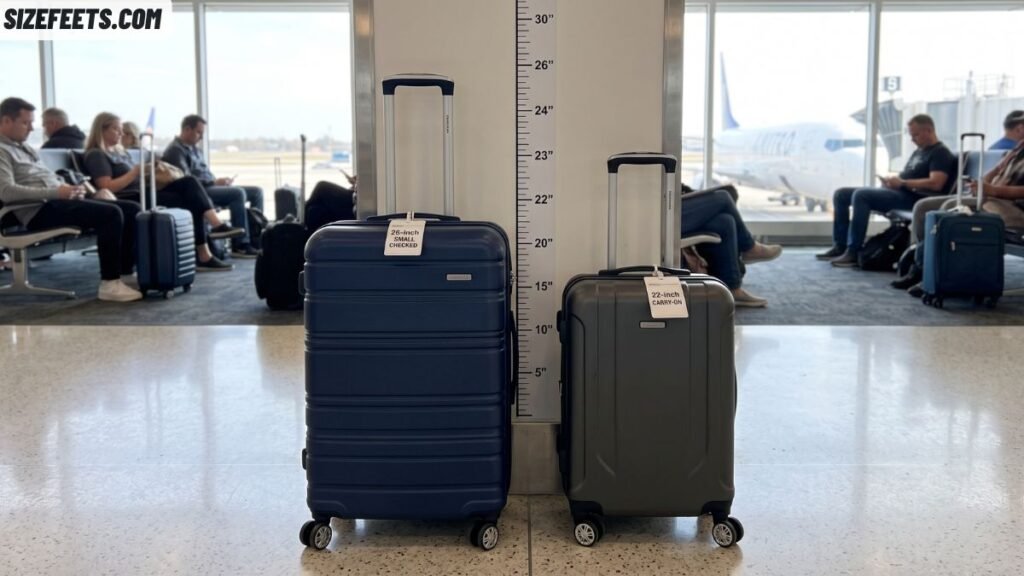
A carry-on suitcase is close to 26 inches in height, or a bit under. A standard carry-on stands about 22 to 24 inches tall, just below the mark. A slightly larger checked bag reaches 26 inches or more.
Suitcases come in sizes set by airline rules for carry-on and checked bags. A carry-on is usually 22 inches tall to fit in overhead bins, while mid-size checked bags run 25 to 27 inches. So 26 inches matches a small checked suitcase. Because luggage is a familiar item, it makes a handy travel reference. Picture a carry-on with a couple of inches added, or a small checked bag, to see 26 inches.
Two Rulers End to End
Two rulers laid in a line come close to 26 inches. Each standard ruler is 12 inches, so two end to end reach 24 inches, just 2 inches short of 26. Add a couple of inches past the second ruler to hit the mark.
Rulers are made of wood, plastic, or metal and marked in inches and centimeters. Two of them equal 24 inches, or 2 feet. Because 26 inches is just past that, this is an easy way to picture the length. Lay two rulers end to end, then add two more inches, and you’ve reached 26 inches. It’s a simple method using tools from any desk or school bag.
An Acoustic Guitar (Part of It)
An acoustic guitar helps you picture 26 inches along its body and neck. A full guitar is about 40 inches long, so 26 inches covers roughly the body plus part of the neck. Picture the guitar from the base to partway up the neck.
Guitars are made of wood, with a hollow body that makes the sound louder. The full length from the base to the headstock is around 40 inches for a standard model. Because 26 inches is about two-thirds of a guitar’s length, it makes a handy partial reference. If you play, picture measuring from the bottom of the guitar up to about the middle of the neck to see 26 inches.
Four Dollar Bills in a Line
Four dollar bills laid end to end are close to 26 inches. Each US bill is 6.14 inches long, so four in a row reach about 24.6 inches, just under the mark. Add a small gap between them to reach 26 inches.
Every US bill shares the same 6.14-inch length, from the $1 to the $100. That uniform size makes bills a handy pocket ruler. Four bills end to end come to about 24.6 inches, close to 26. Because you likely carry cash, this is an easy on-the-go way to picture the length. Lay four bills in a line and add a little to reach 26 inches.
How to Measure 26 Inches Without a Ruler
No ruler nearby? These simple tricks let you get close to 26 inches using things you already have.
Use Two Rulers or a Yardstick
Rulers get you there fast. Two standard rulers laid end to end reach 24 inches, so add 2 more inches to hit 26. Or use a yardstick and stop at the 26-inch mark, which is 10 inches before its end. Both methods are quick and accurate. If you have any marked ruler at home or school, this is the easiest way to measure or picture 26 inches with no long tape.
Line Up Dollar Bills
US dollar bills work as a folding ruler. Each bill is 6.14 inches long, so four bills end to end reach about 24.6 inches. Add a small gap or a bit past the fourth bill to reach 26 inches. Lay the bills flat and line them up. Since every US bill is the same size, this trick works with any bills in your wallet. It’s a handy way to measure when no tape is around.
Use a Bike Wheel
A 26-inch bike wheel is a ready-made guide. Since the wheel measures exactly 26 inches across, you can lay an object against it to compare. If your item matches the wheel’s diameter, it’s about 26 inches. This works well for checking lengths in a garage or shed. A common bike wheel gives you an instant 26-inch reference with no measuring tools needed at all.
26 Inch in Feet vs. Other Common Lengths
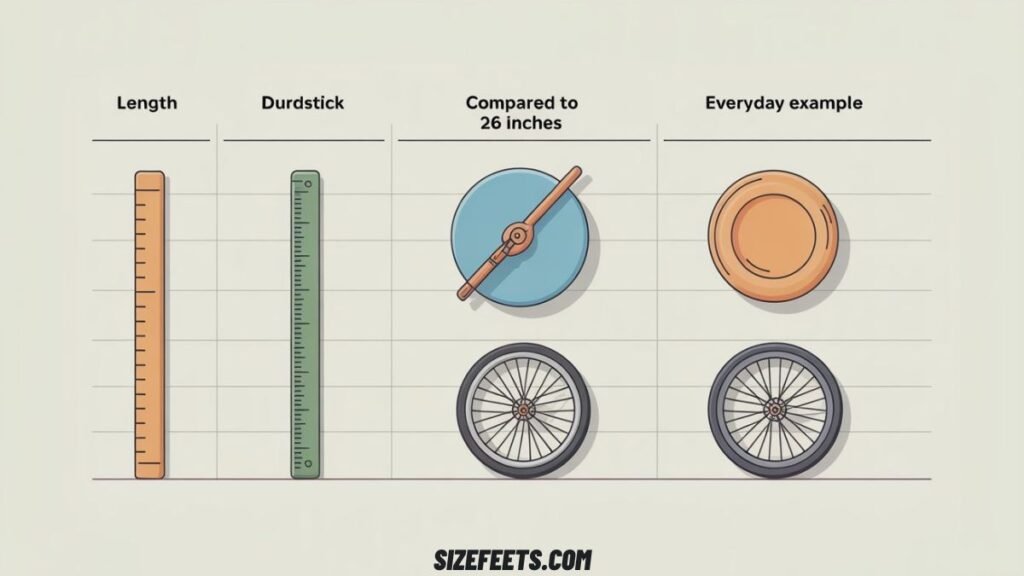
Seeing 26 inches next to nearby lengths helps it stick. 24 inches is exactly 2 feet, just 2 inches shorter, the length of two rulers. 12 inches is one foot, less than half of 26 inches. 36 inches is one yard, or 3 feet, a good bit longer. And 26 centimeters, which sounds similar but isn’t, equals only about 10.2 inches, far shorter than 26 inches. So 26 inches sits just past 2 feet, longer than two rulers but shorter than a yard.
| Length | Compared to 26 Inches | Everyday Example |
| 12 in (1 ft) | Less than half | A standard ruler |
| 24 in (2 ft) | 2 inches shorter | Two rulers end to end |
| 26 in (2 ft 2 in) | The base length | A 26-inch bike wheel |
| 36 in (3 ft / 1 yd) | 10 inches longer | A yardstick |
| 26 cm | Much shorter (~10.2 in) | A standard dinner plate |
Frequently Asked Questions
What is 26 inches in height?
26 inches in height equals 2 feet 2 inches, or about 66 cm. That is close to the diameter of a bike wheel.
Is 28 inches 4 feet?
No, 28 inches is not 4 feet. Four feet equals 48 inches, so 28 inches is 2 feet 4 inches.
Is 26 inches 2 feet?
Not quite. 26 inches is 2 feet 2 inches. Two feet equals 24 inches, so 26 is two inches more.
Is 26 inches 3 feet?
No, 26 inches is not 3 feet. Three feet equals 36 inches, so 26 inches is 10 inches short.
How is 3 feet in inches?
Three feet equals 36 inches. You multiply 3 by 12, since one foot holds 12 inches.
How many inches is 2 feet?
2 feet equals 24 inches, since one foot is 12 inches and 2 times 12 is 24. So 26 inches is 2 feet plus 2 more inches. If you’re converting the other way, just multiply the number of feet by 12 to get inches.
Conclusion
Now you know 26 inch in feet and how to picture it with ease. The conversion equals 2 feet 2 inches. In decimal, that is about 2.17 feet. In metric, it comes to 66 centimeters. You get this by dividing 26 by 12. These few numbers cover almost everything you need to know.
You can also picture the length with simple objects. A 26-inch bike wheel matches it exactly. A 26-inch TV shows it on the diagonal. Two rulers plus two inches reach the mark too. Keep these easy items in mind whenever you need a guide. With this knowledge, you can picture 26 inch in feet anytime, even without a ruler.






2 Comments